Macroeconomic Policy Office Weekly Economic Report as of January 14, 2022
The Macroeconomic Policy Office (MPO) reports the weekly economic situation as of January 14, 2022, as follows:
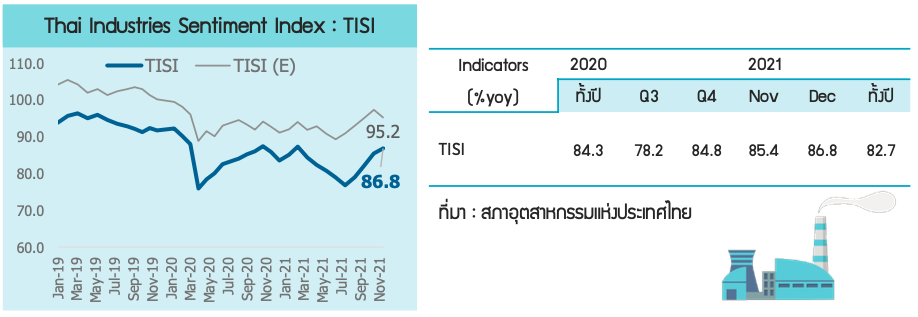
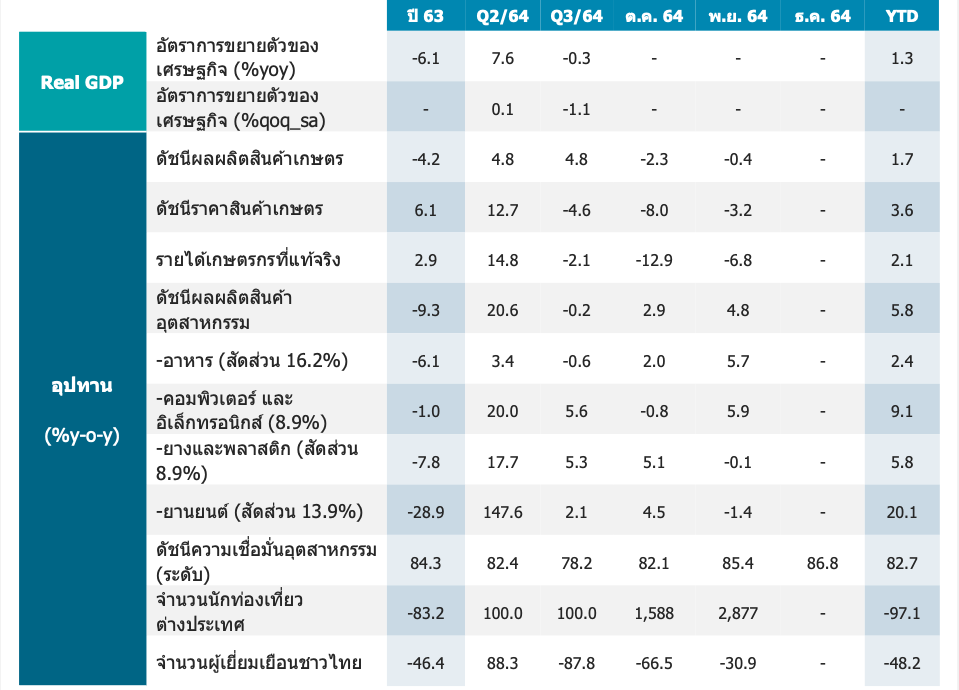
1. The Industrial Confidence Index (TISI) for December 2021 increased to 86.8 from 85.4 in the previous month.
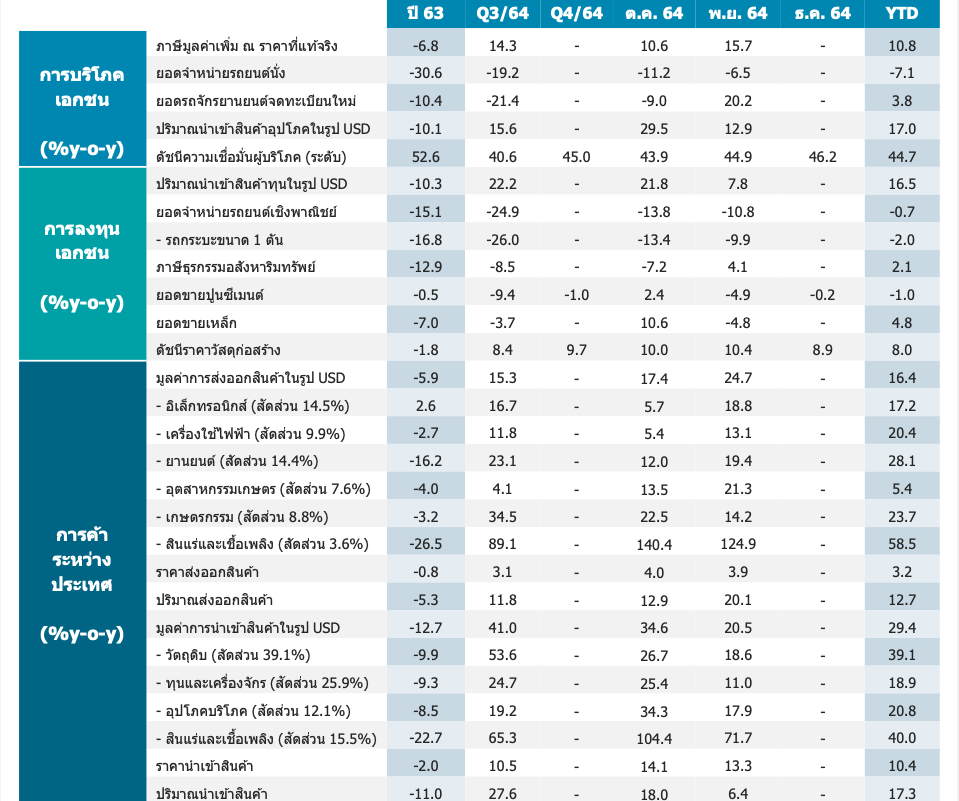
2. Domestic cement sales in December 2021 contracted by -0.2% compared to the same period last year.
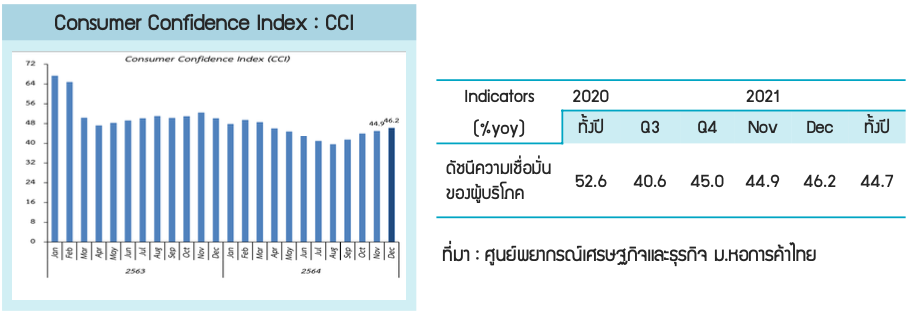
3. The Consumer Confidence Index in December 2021 rose to 46.2 from 44.9 in the previous month.
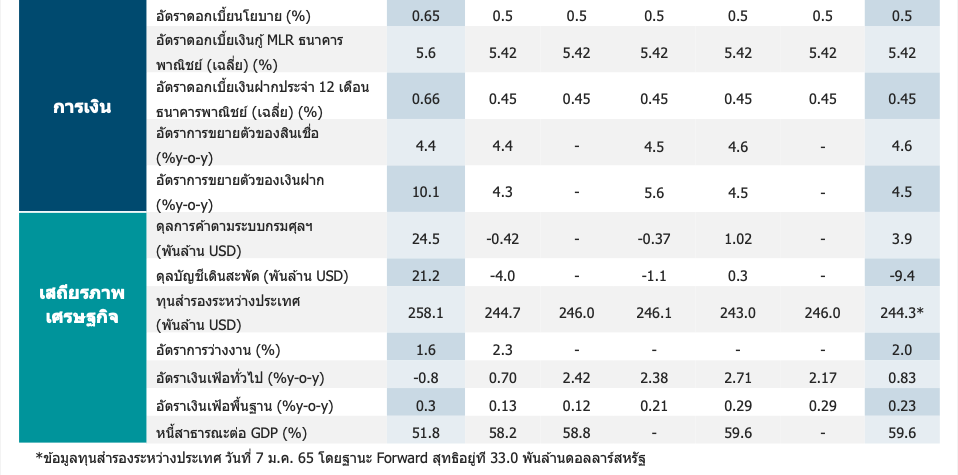
4. Public debt outstanding at the end of November 2021 was 59.58% of GDP.
5. The liquidity asset level of commercial banks in November 2021 was 1.93 times the legally required liquidity assets.
Indicators of the Thai Economy
The Industrial Confidence Index (TISI) for December 2021 increased for the fourth consecutive month to 86.8 from 85.4 in the previous month.
The index for December 2021 rose across all sizes of industries and regions for the fourth consecutive month, with almost all components of the index increasing, including overall orders, overall sales, production volume, and performance, except for operational costs. This was supported by improved economic activities in manufacturing, trade, and international travel, along with the recovery of both domestic and foreign demand. However, the emergence of new COVID variants in Thailand and many countries worldwide is expected to increasingly impact production and exports in early 2022 and beyond if the outbreak situation does not improve as anticipated, leading to a decline in business confidence, as reflected in the three-month ahead confidence index, which decreased for the first time in six months to 95.2 from 97.3 in November 2021.
Domestic cement sales in December 2021 contracted by -0.2% compared to the same period last year, but when adjusted for seasonality, it expanded by 5.2% compared to the previous month.
In December 2021, cement sales continued to grow for the third consecutive month on a month-to-month basis after adjusting for seasonality, driven by improved construction activities as the COVID-19 situation began to ease and accelerated construction in state infrastructure projects. However, in the near future, the new COVID-19 variant outbreak, which has led to an increase in the number of infections in a short period, may affect public and business confidence, leading to a slowdown in economic activities, including the construction sector.
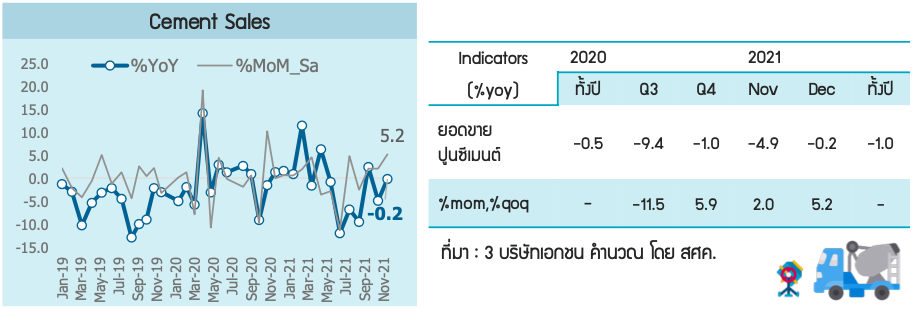
Source: 3 Private Companies Calculated by the Office of the National Economic and Social Development Council
The Consumer Confidence Index in December 2021 rose to 46.2 from 44.9 in the previous month, marking the fourth consecutive month of improvement and the highest level in nine months since April 2021.
This improvement was due to the relaxation of lockdown measures by the Center for COVID-19 Situation Administration (CCSA) to support the reopening of the country starting November 1, 2021, allowing tourists from low-risk countries to enter Thailand without quarantine. Although the CCSA canceled the Test & Go program and implemented a quarantine system while suspending new tourist registrations from December 21, 2021, to January 4, 2022, the cap on diesel prices at no more than 30 baht per liter had a positive psychological effect on consumer confidence, leading to increased spending by Thai consumers and foreign tourists towards the end of the year, along with government economic stimulus measures that would further circulate in the economy.
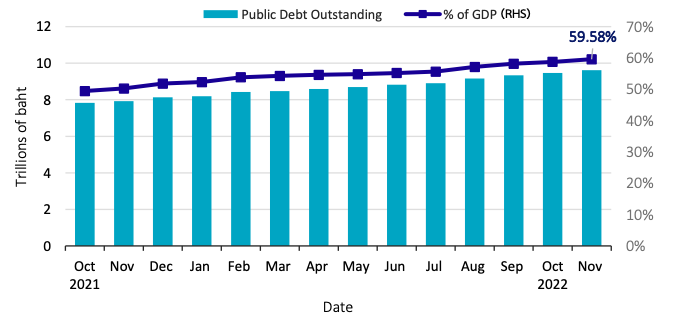
Public debt outstanding at the end of November 2021 totaled 9,620,306 million baht, or 59.58% of GDP. Compared to the previous month, public debt increased by a net of 159,302 million baht.
The status of Thailand's public debt is considered stable, as reflected by the ratio of public debt to GDP remaining below the fiscal discipline framework set at no more than 70% of GDP. Most public debt is long-term, with 86.74% of the total public debt and 98.2% being domestic debt.
Source: Public Debt Management Office
Financial Indicators
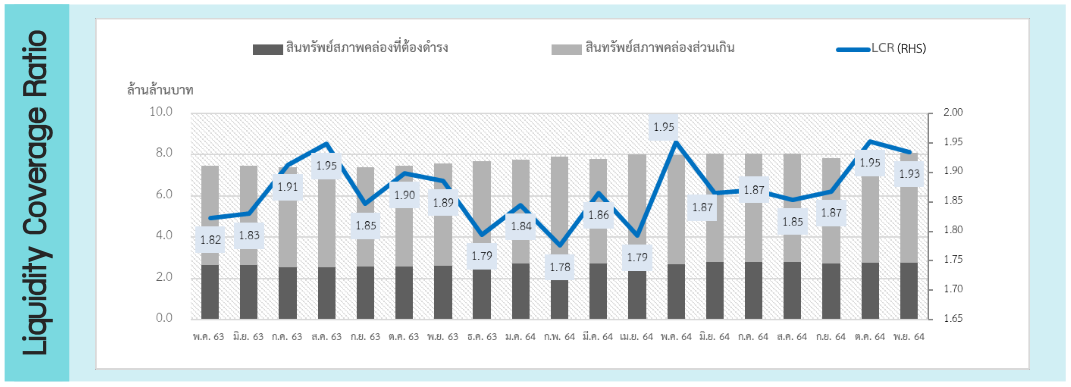
The liquidity asset level of commercial banks in November 2021 was 1.93 times the legally required liquidity assets. The outstanding liquidity assets of the entire banking system in November 2021 amounted to 5.3 trillion baht, a decrease from the previous month. The Bank of Thailand has adjusted the liquidity asset maintenance criteria for commercial banks from the previous requirement of maintaining liquidity assets of no less than 6% of deposits to no less than 100% (or 1.0 times) of the estimated net cash outflow in crisis conditions (Liquidity Coverage Ratio: LCR) since January 2016.
Source: Bank of Thailand
International Economic Indicators
United States
-
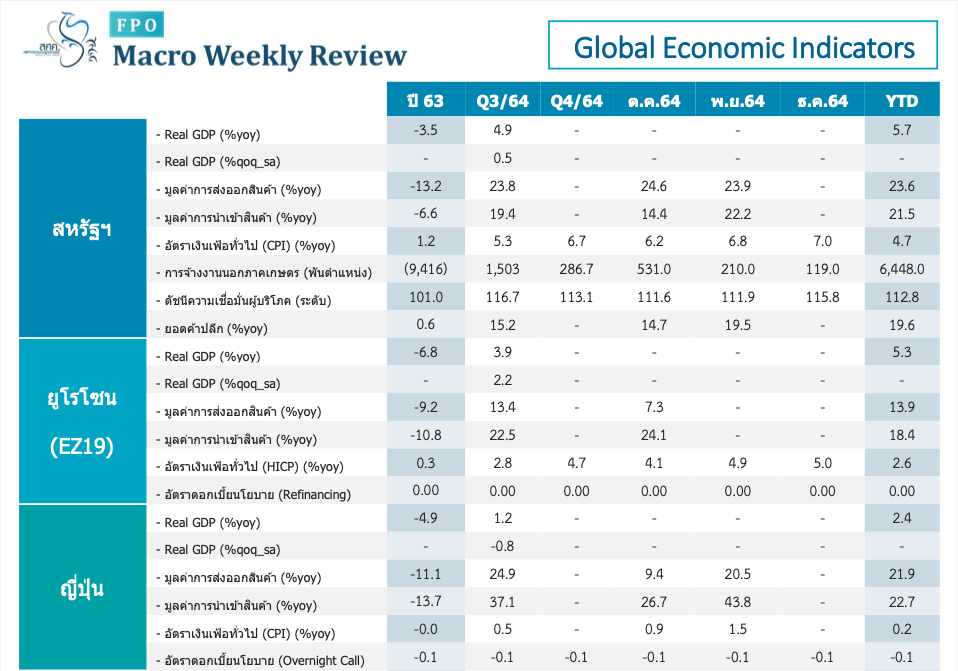
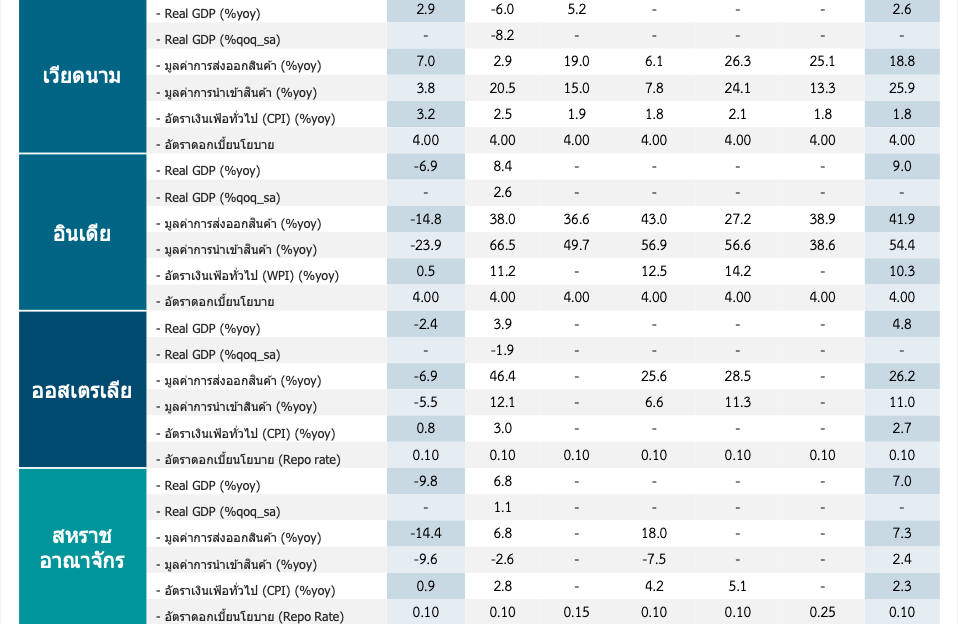
The inflation rate (CPI) in December 2021 was 7.0% year-on-year, up from 6.8% in the previous month, marking the highest level in approximately 38 years, primarily due to rising energy prices. As a result, the inflation rate for 2021 was 4.7% year-on-year, up from 1.2% in 2020.
-
The number of first-time unemployment claims for the week of January 2-8, 2022, was 230,000, an increase from 207,000 in the previous week, and the highest level in eight weeks due to the rapid spread of the Omicron variant affecting economic activities from air travel to school reopening plans. However, this level is still lower than the pre-pandemic average of 215,000, indicating that the U.S. labor market remains tight as the economy continues to grow rapidly and labor demand remains strong.
China
-
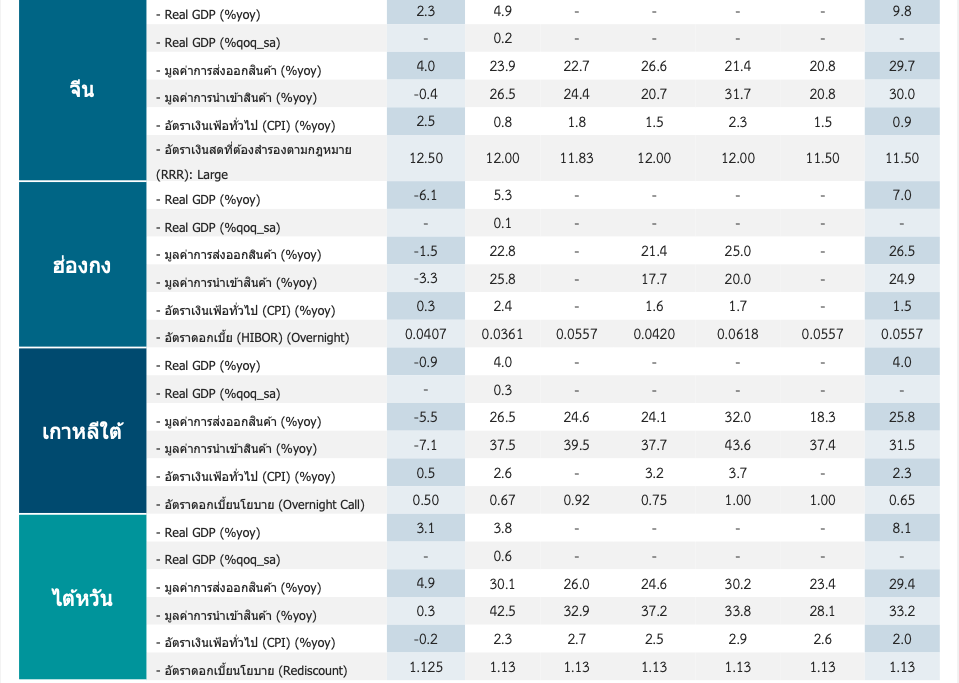
The inflation rate in December 2021 was 1.5% year-on-year, down from 2.3% in the previous month, due to lower pork prices and food costs as the government intervened to control rising raw material prices and address energy shortages. Meanwhile, hotel and accommodation service prices decreased due to the rapid spread of the Omicron variant, leading to reduced travel numbers and the reimplementation of lockdown measures in some regions.
-
The value of exports in December 2021 grew by 20.9% year-on-year, slowing from 22.0% in the previous month amid weakening global demand due to the Omicron variant outbreak.
-
The value of imports in December 2021 grew by 19.5% year-on-year, slowing from 31.7% in the previous month due to weakened domestic demand from the new COVID-19 outbreak.
-
The trade balance in December 2021 recorded a surplus of 94.5 billion USD, up from a surplus of 71.7 billion USD in the previous month.
Eurozone
- The unemployment rate in November 2021 was 7.2% of the total labor force, down from 7.3% in the previous month, marking the lowest unemployment rate since March 2020.
- Industrial production in November 2021 contracted by 1.5% year-on-year, reversing from a growth of 0.2% in the previous month, marking the first contraction in eight months.
Australia
- The value of exports in November 2021 grew by 28.5% year-on-year, accelerating from 25.6% in the previous month.
- The value of imports in November 2021 grew by 11.3% year-on-year, accelerating from 6.6% in the previous month.
- The trade balance in November 2021 recorded a surplus of 6.3 billion AUD, down from a surplus of 9.5 billion AUD in the previous month.
Malaysia
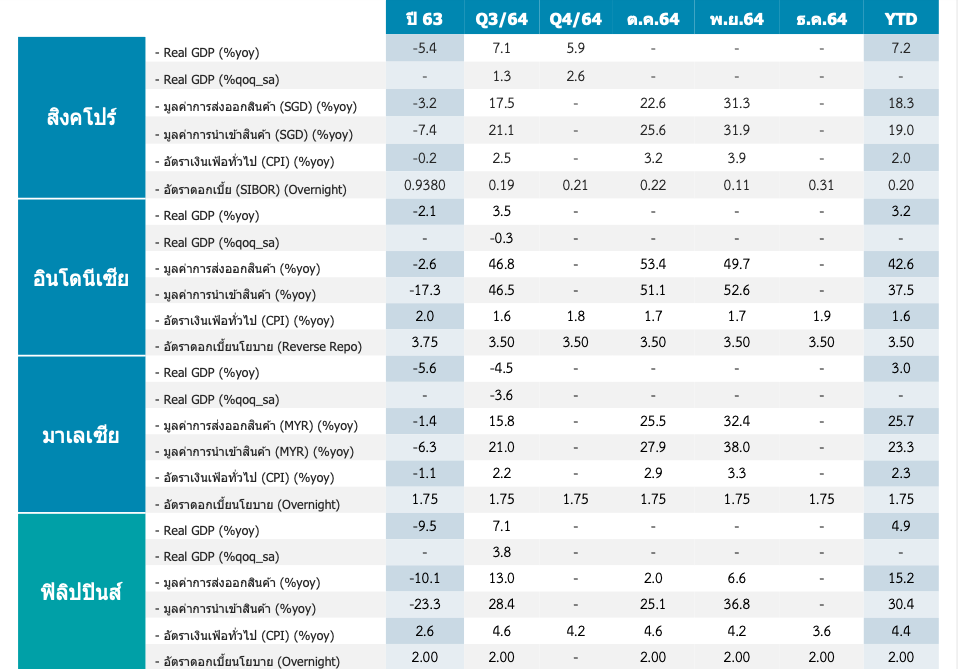
- Retail sales in November 2021 grew by 6.7% year-on-year, up from 4.7% in the previous month, driven primarily by fuel sales.
- Industrial production in November 2021 grew by 9.4% year-on-year, improving from 5.5% in the previous month, primarily due to the production of computers and electronic equipment.
- The unemployment rate in November 2021 was 4.3% of the total labor force, unchanged from the previous month.
Indonesia
- Retail sales in November 2021 grew by 10.8% year-on-year, accelerating from 6.5% in the previous month, driven by food, beverage, and tobacco sales.
- The Consumer Confidence Index in December 2021 was at 118.3 points, slightly down from 118.5 points in the previous month.
Philippines
- The value of exports in November 2021 grew by 6.6% year-on-year, accelerating from 2.0% in the previous month.
- The value of imports in November 2021 grew by 36.8% year-on-year, accelerating from 25.1% in the previous month.
- The trade balance in November 2021 recorded a deficit of 4.7 billion USD, increasing from a deficit of 4.0 billion USD in the previous month.
South Korea
- The Bank of Korea decided to raise the policy interest rate to 1.25% per year from 1.0% per year in the November 2021 meeting due to ongoing inflation concerns and rising household debt.
- The unemployment rate in December 2021 was 3.8% of the total labor force, up from 3.1% in the previous month, marking the highest level since June 2021 due to the implementation of measures to control the spread of Omicron, which led to some workers losing their jobs.
Money Market and Exchange Rate Indicators
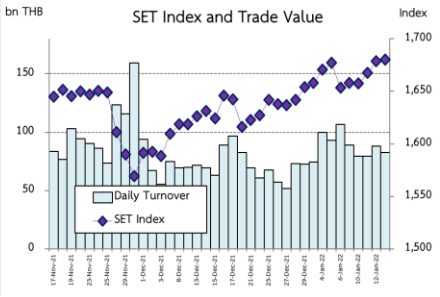
The SET index increased from the previous week, contrary to other regional stock markets that declined, such as Nikkei225 (Japan), CSI300 (Shanghai), and DJIA (USA). On January 13, 2022, the index closed at 1,680.02 points, with an average trading value between January 10-13, 2022, at 82,304.80 million baht per day. Foreign investors and securities company accounts were net buyers, while domestic retail investors and institutional investors were net sellers. Between January 10-13, 2022, foreign investors net bought securities worth 6,337.52 million baht.
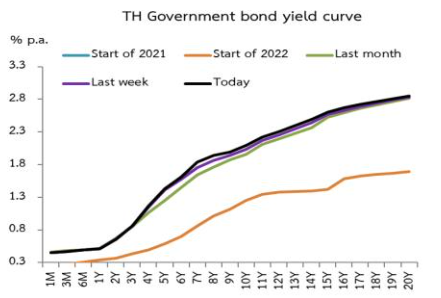
The overall yield on government bonds increased by 1 to 8 basis points. During this week, investors participated in the auction of 15-year government bonds, which saw demand of 1.68 times the auction amount. Between January 10-13, 2022, foreign capital flowed into the bond market, netting 22,125.99 million baht, and since the beginning of the year until January 13, 2022, foreign capital has net flowed into the bond market by 39,843.32 million baht.
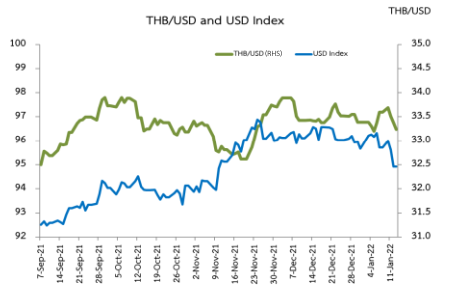
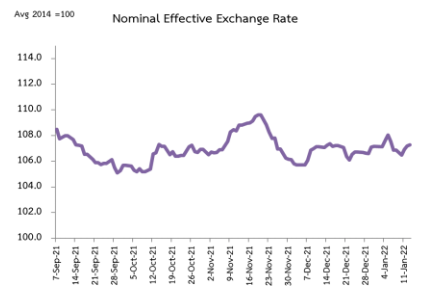
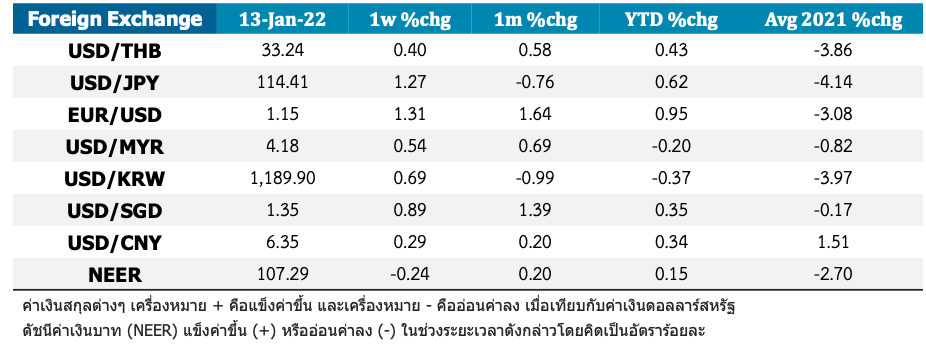
The Thai baht appreciated from the previous week, closing at 33.24 baht per USD on January 13, 2022, appreciating by 0.40% from the previous week. This aligns with other regional currencies such as the yen, euro, won, ringgit, Singapore dollar, and yuan, which also appreciated against the USD. However, the baht's appreciation was less than that of other regional currencies, resulting in the Nominal Effective Exchange Rate (NEER) index depreciating by -0.24% from the previous week.
Thank you for the information from the Macroeconomic Policy Bureau, Fiscal Policy Office, Ministry of Finance 02-273-9020 Ext. 3259